2 min read

Architecture Matters - PART 9: Customers are saying "Use What We Have" for Project Management

Architecture Matters - PART 9: Customers are saying
Architecture Matters - PART 9: Customers are saying "Use What We Have" for Project Management
3:00

Something has shifted in the customer conversations we’re having...

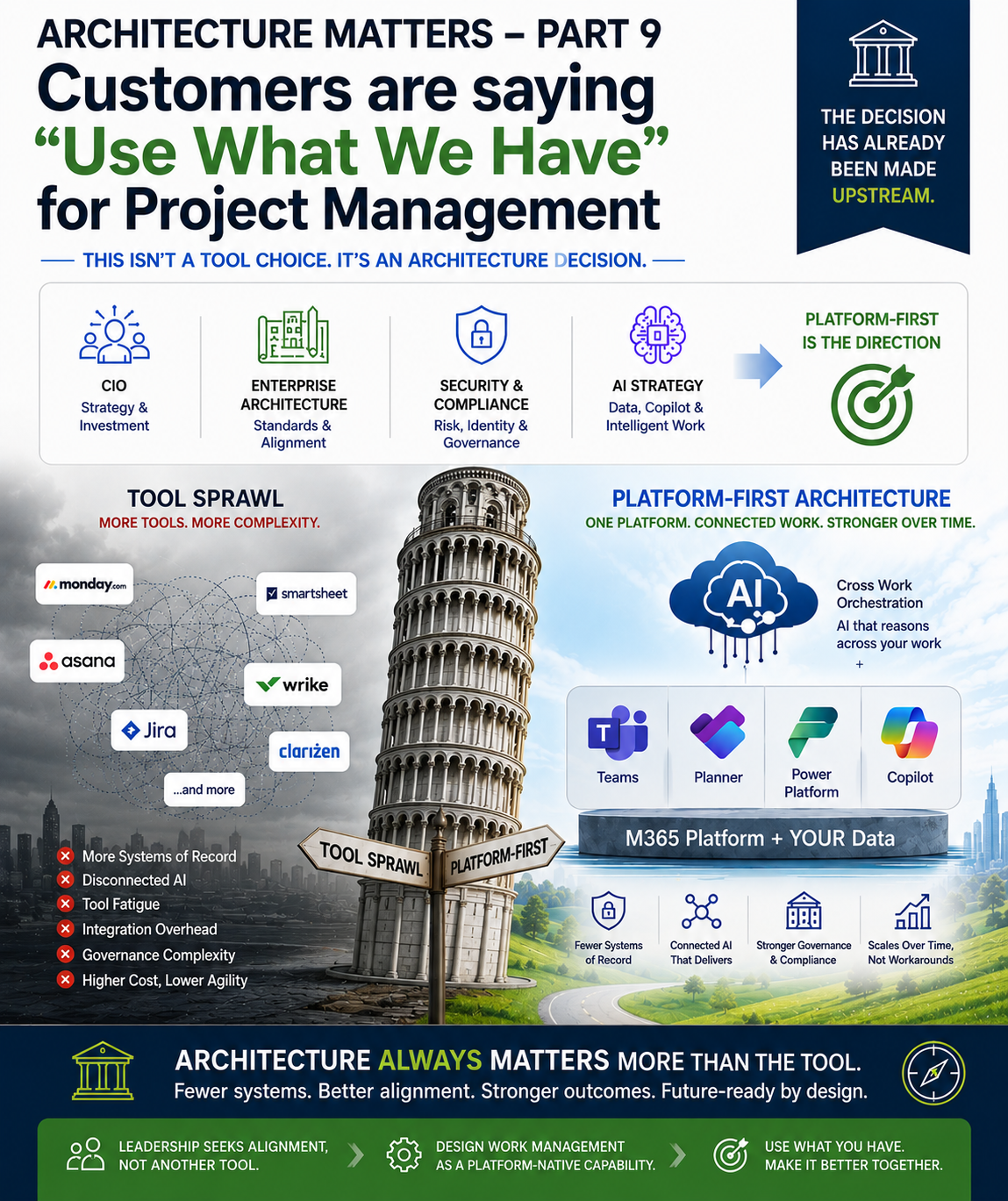
The "stay on the Microsoft platform" message isn't coming from PMOs or Project Managers. It's coming from CIOs, CTOs, enterprise architects, and digital workplace leaders. And it isn't a preference or even negotiable in many cases.

PMs and PMO leads tell us their leadership is saying "we're committed to the Microsoft platform, stop adding more tools, use what we already have".

That's an architecture decision. Leadership is telling you where security, identity, compliance, governance, collaboration, and increasingly Copilot and AI are going to live. They're telling you where work management needs to live too.

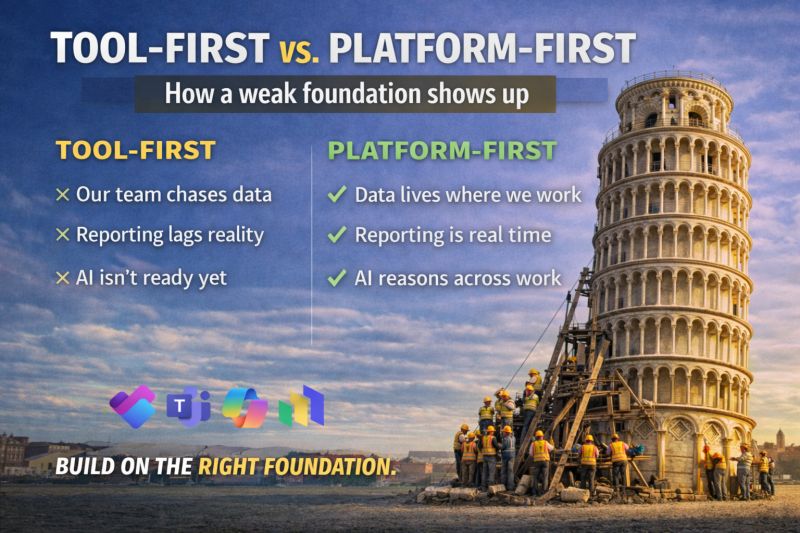
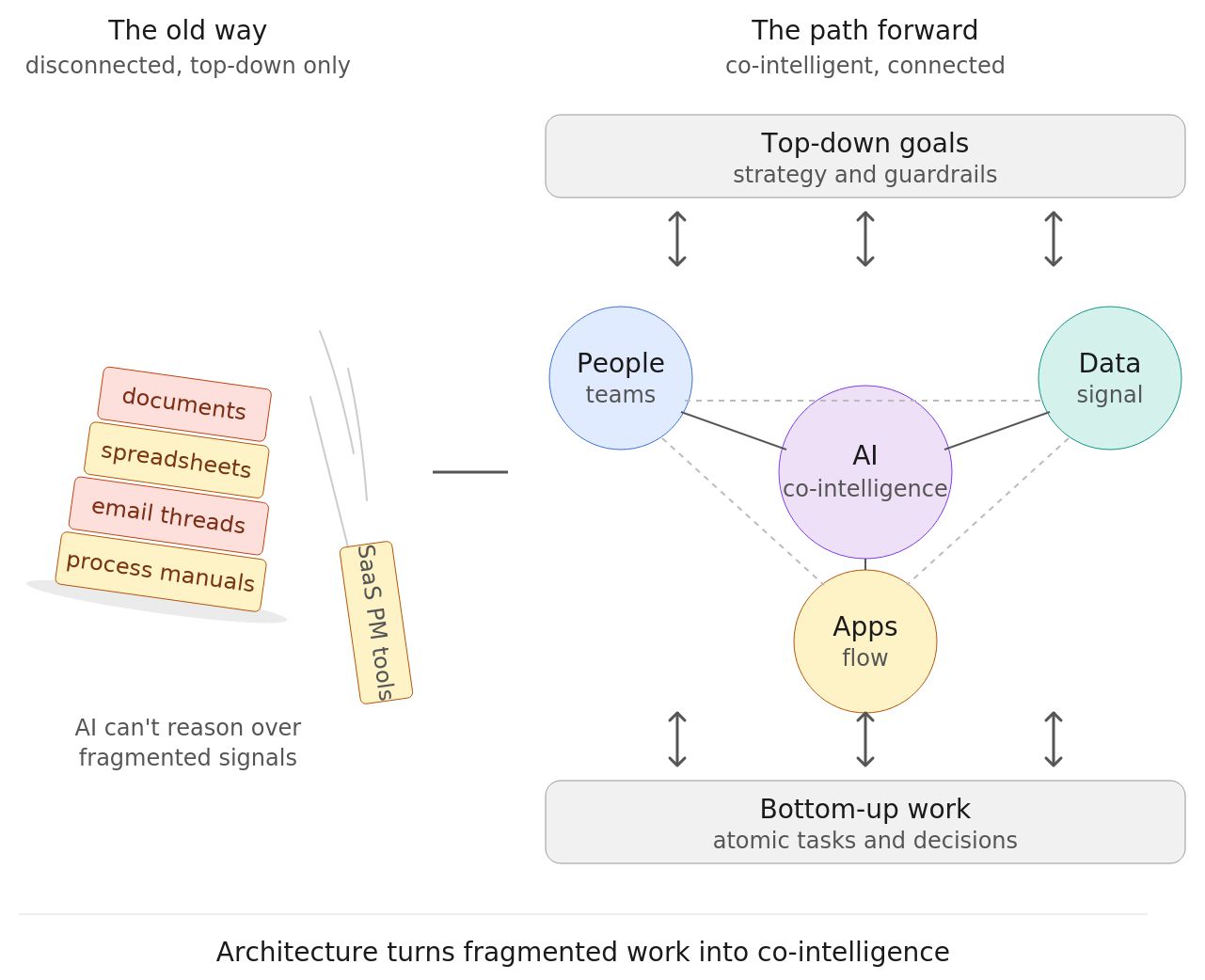
A few things converged to put us here. TOOL FATIGUE IS REAL & ENTERPRISES ARE OVER-SUBSCRIBED and exhausted by the effort it takes to keep their stack stitched together and all churn context switching has on users. AI changed the equation on top of that, because AI doesn't create much value trapped inside one app. It needs to reason across work, conversations, files, tasks, and outcomes, and that only happens when the data lives inside the tenant. 

Meanwhile Microsoft 365 has quietly become collaboration, automation, analytics, low-code, and AI. From the leadership seat, buying another standalone PPM tool starts to feel like working against the platform strategy they already committed to.

PMOs and PMs are feeling the tension. They're hearing "stay on the platform" from above, while years of vendor narrative told them real PPM requires a specialized tool. So, they default back to tool-replacement thinking even when leadership is signaling something else. That's a mindset gap, not a capability gap.

Observation: "Use what we have" gets misread as "lower the bar." That is NOT what leadership is asking for. They seek fewer systems of record, less architectural sprawl, tighter alignment across work, data, automation, and AI, and solutions that get stronger over time instead of harder to sustain. That takes intentional design.

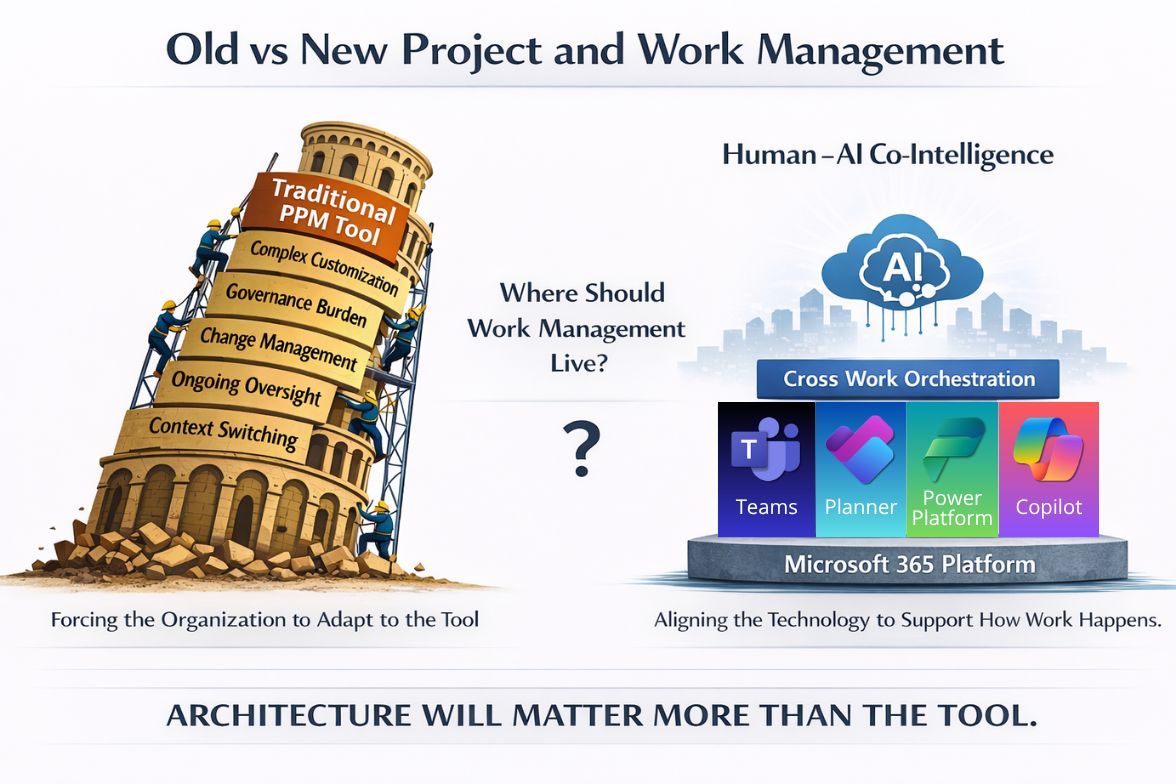
The PMOs leaning into this are asking a different question. Instead of what tool do we need, they're asking how do we design project and work management as a platform-native capability? Work managed where it already happens — Teams, Planner, files, conversations. Automation in Power Platform. Projects treated as part of broader work systems. Tight alignment with enterprise architecture. It's a move from tool ownership to architecture stewardship.

Architecture always matters more than the tool.

For many, the need to modernize outdated PPM tools or Project Online retirement is forcing a binary decision: get another SaaS tool or use what they have. Leadership is asking for alignment. And INCREASINGLY, ALIGNMENT MEANS PLATFORM-FIRST.


What's next?