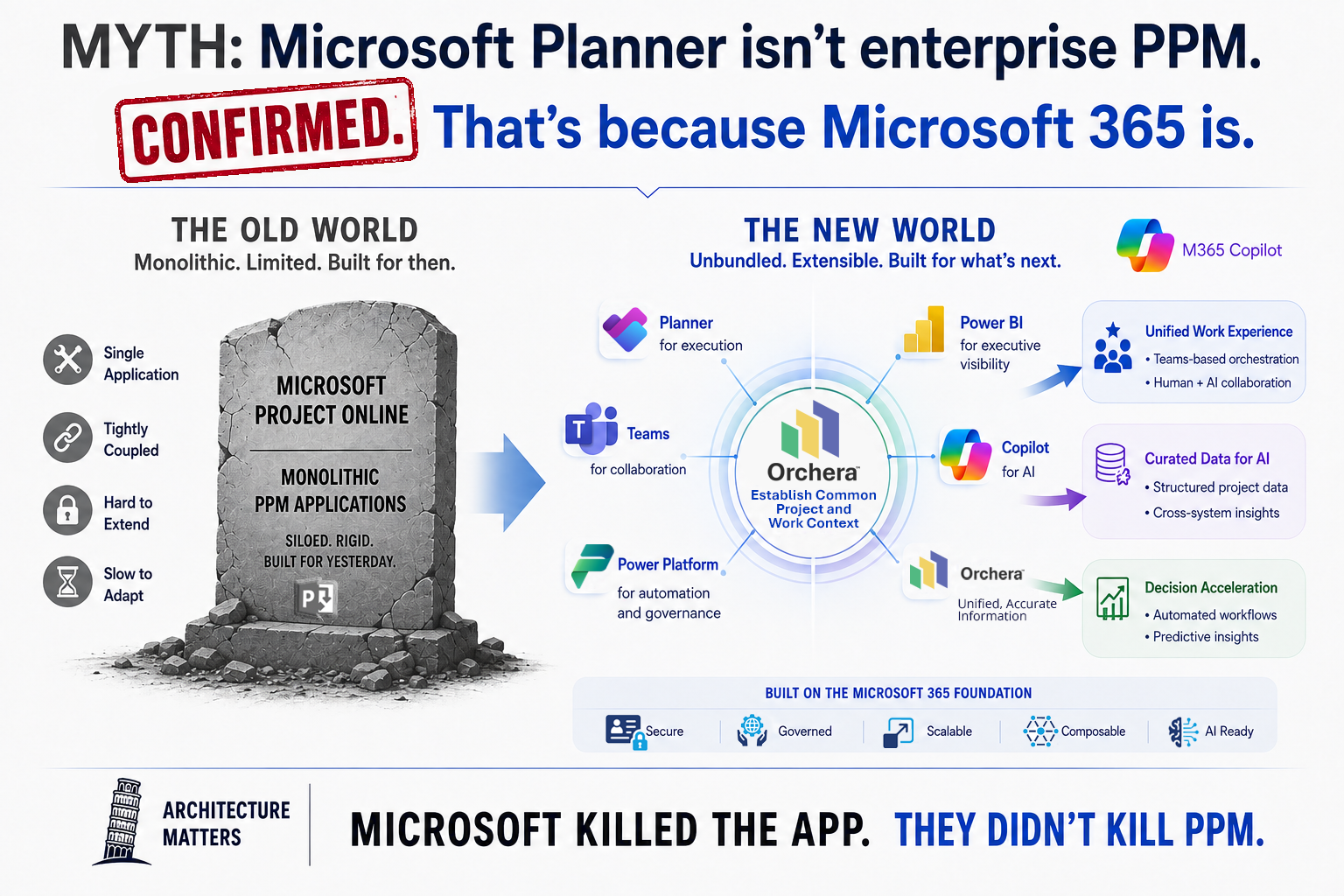
Architecture Matters PART 16: MYTH - Microsoft Planner isn't enterprise PPM.
Why project and portfolio management needs common context before AI—and how fragmented systems undermine decisions, execution, and value delivery.

1 min read
Mike Taylor
:
Published
Updated
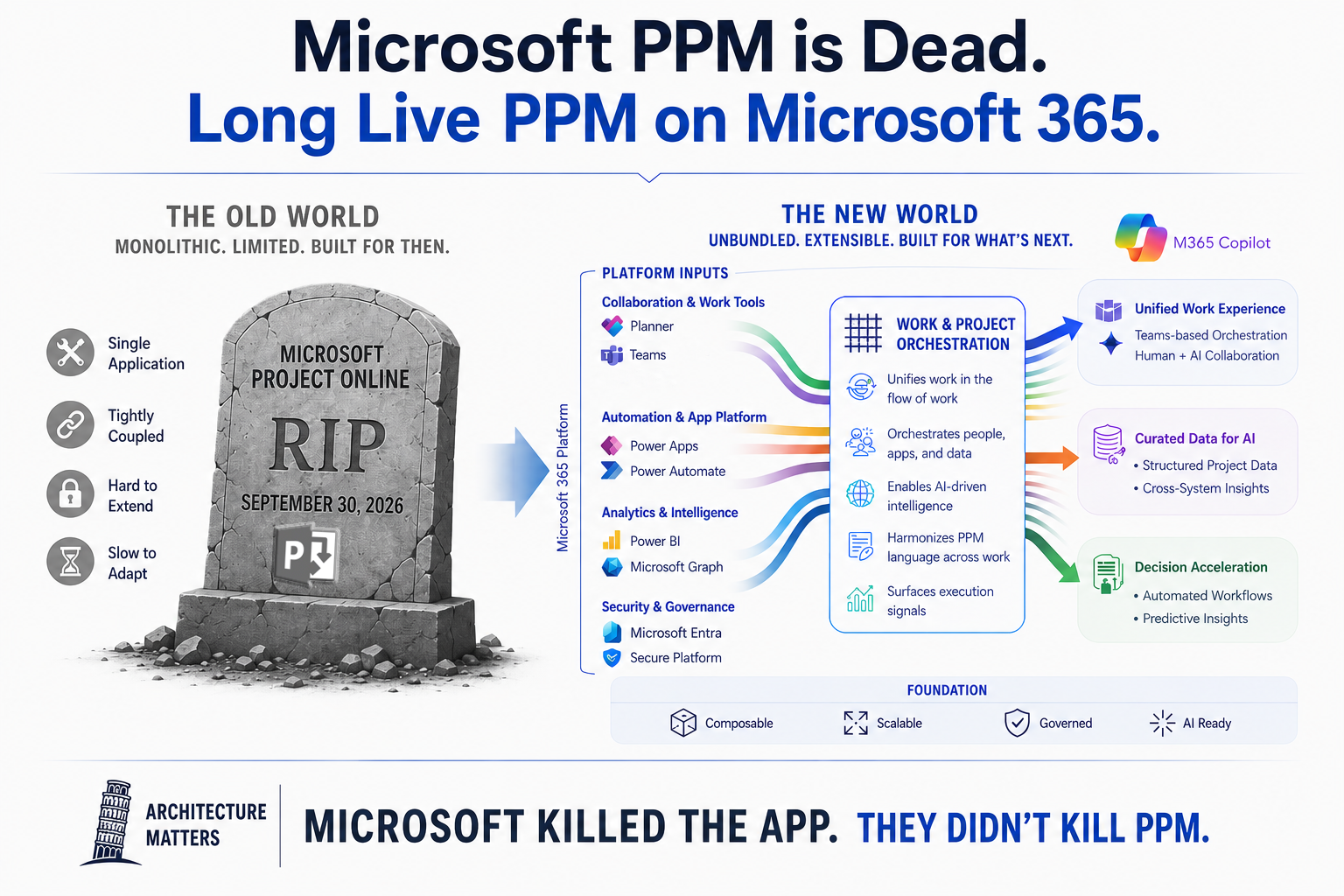
In 2018, Microsoft stopped trying to evolve Project Online. The scheduling engine was embedded in Planner. Microsoft’s language shifted from "PPM Platform" to "Platform for PPM" which seems like a minor shift. It’s not. It’s part of an intentional architectural reset intended to be generational.
Most of the market called it a retreat. With Project Online's retirement set for September 30, 2026, that assumption has hardened into ‘fact’ across the PMO community: Microsoft has walked away from enterprise PPM.
Every retirement headline reinforces the myth. Very few are talking about what replaced it.
MICROSOFT DIDN’T KILL PPM, THEY UNBUNDLED IT!
Instead of a single application, PPM is now composed across Planner, Power Platform, Teams, & Copilot. Then they did what most don’t – they left it incomplete and dared partners to unify it into something the old monolith app could never be.
Most of the market didn't take the dare. They eulogized Microsoft PPM, propped up Project Online as long as the lights stayed on, or migrated away to SaaS Project/PPM products.
We answered the dare and built Teams4PM. A handful of partners we respect also took the dare with their own IP.
What came out the other side isn't a Project Online replacement. It's enterprise PPM that lives where the work already happens...in the flow of work, governed instead of bolted-on, built to absorb AI instead of getting disrupted by it.
MICROSOFT PPM IS DEAD. LONG LIVE PPM ON MICROSOFT 365.
Author's note: This post was originally shared on LinkedIn as part of a series
Why project and portfolio management needs common context before AI—and how fragmented systems undermine decisions, execution, and value delivery.
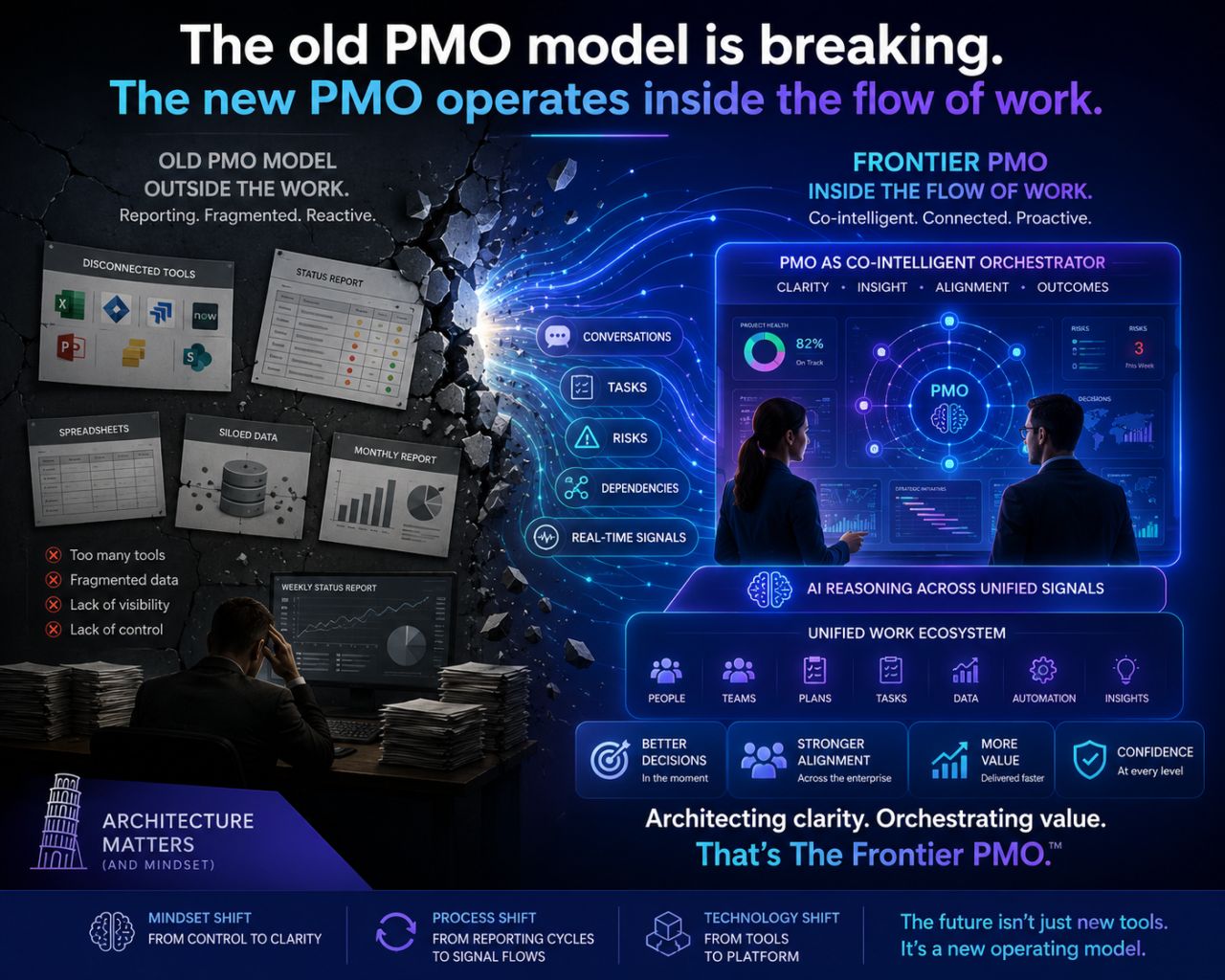
Microsoft didn’t abandon Project Online—it evolved. Discover how a platform-first approach—where tools like Planner Premium, Power Platform, Teams,...
Why tool-first project management fails, and how a platform-first foundation drives scalable outcomes with AI, data, and Microsoft 365.