1 min read
Architecture Matters – PART 6: It’s time to rethink project and work management technologies
Mike Taylor
:
Updated on April 13, 2026
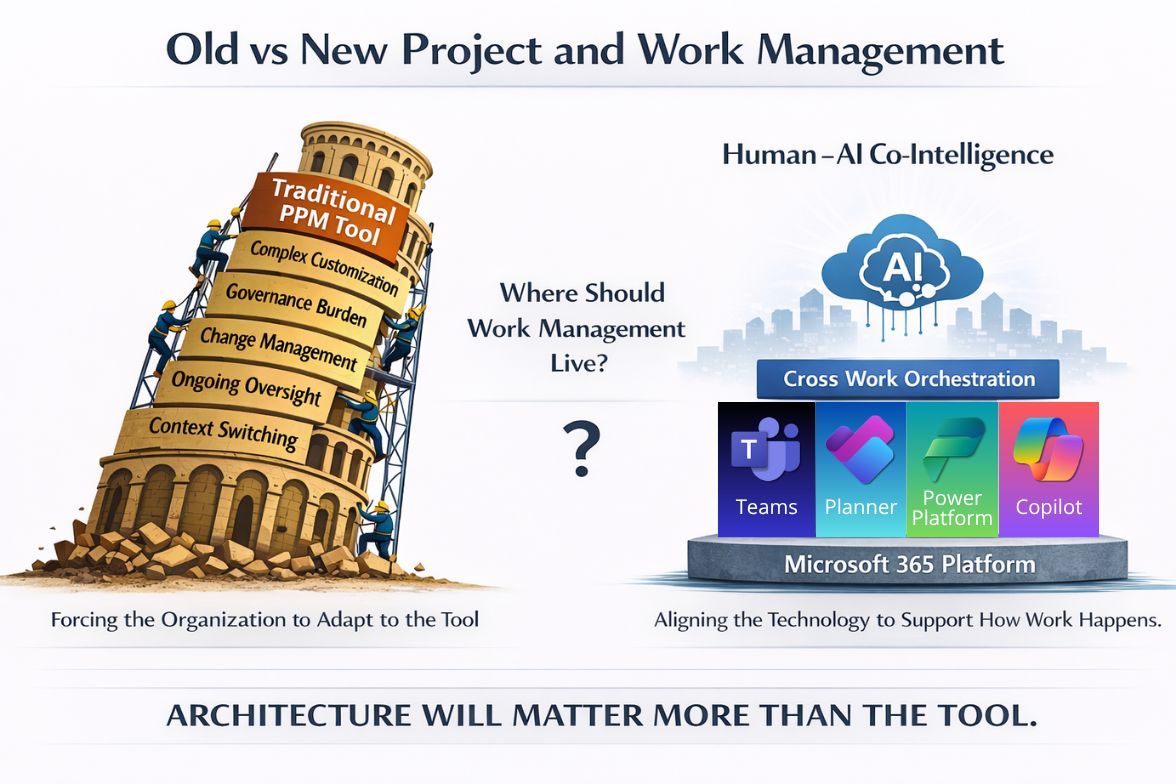
For decades, organizations approached Project and Portfolio Management (PPM) the same way:
➡️ Choose a PPM tool.
➡️ Implement the tool.
➡️ Then spend months, sometimes years, trying to make the tool fit the way the organization actually works.
That usually requires:
-
Heavy configuration and customization
-
Complex governance models
-
Extensive training and change management
-
Ongoing PMO oversight just to keep the system aligned with reality
In many cases, the organization ends up adapting its processes to the tool, rather than the technology supporting how work actually happens.
That model made sense when projects were the primary unit of work and collaboration happened largely outside the system.
But that’s not how work happens today.
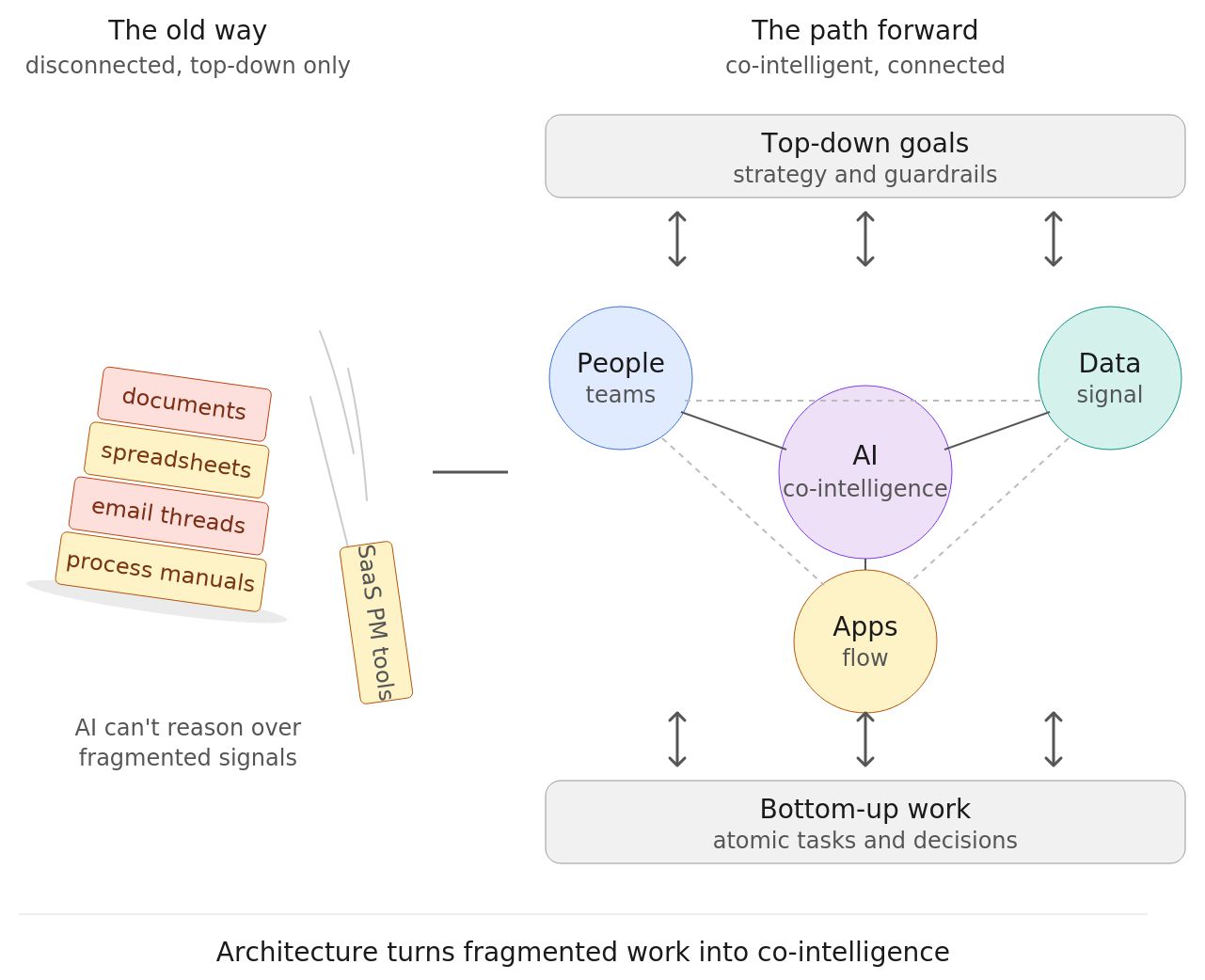
Today, work lives across:
-
Collaboration (conversations, artifacts, meetings, etc.) in Teams
-
Tasks across M365 (Planner, Outlook, Todo, etc.)
-
Workflows & visualizations in Power Platform
-
Insights in Power BI
-
And increasingly signals interpreted by AI
Which raises a bigger question than simply “What replaces Project Online?”
The real question is:
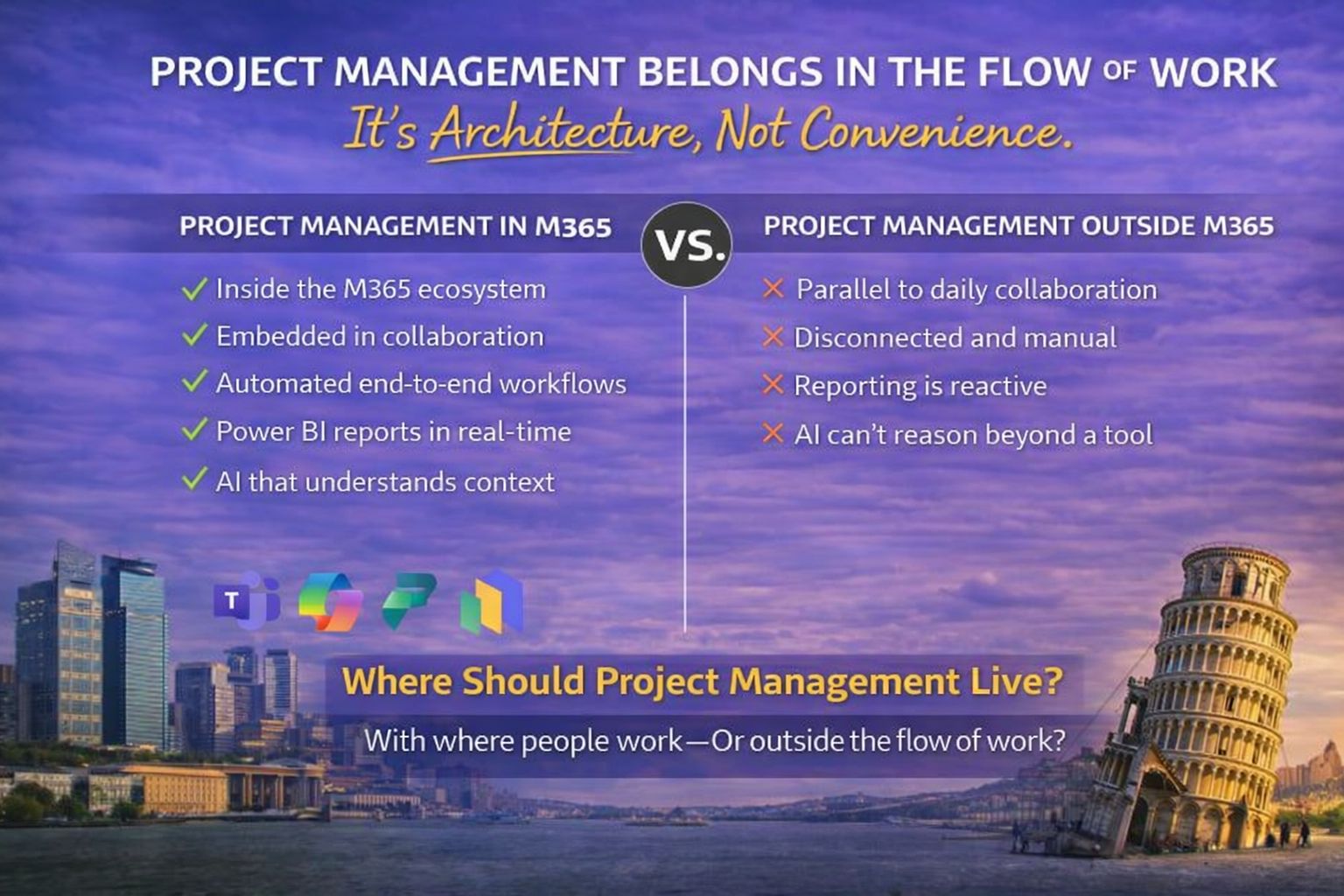
Where should project and work management live?
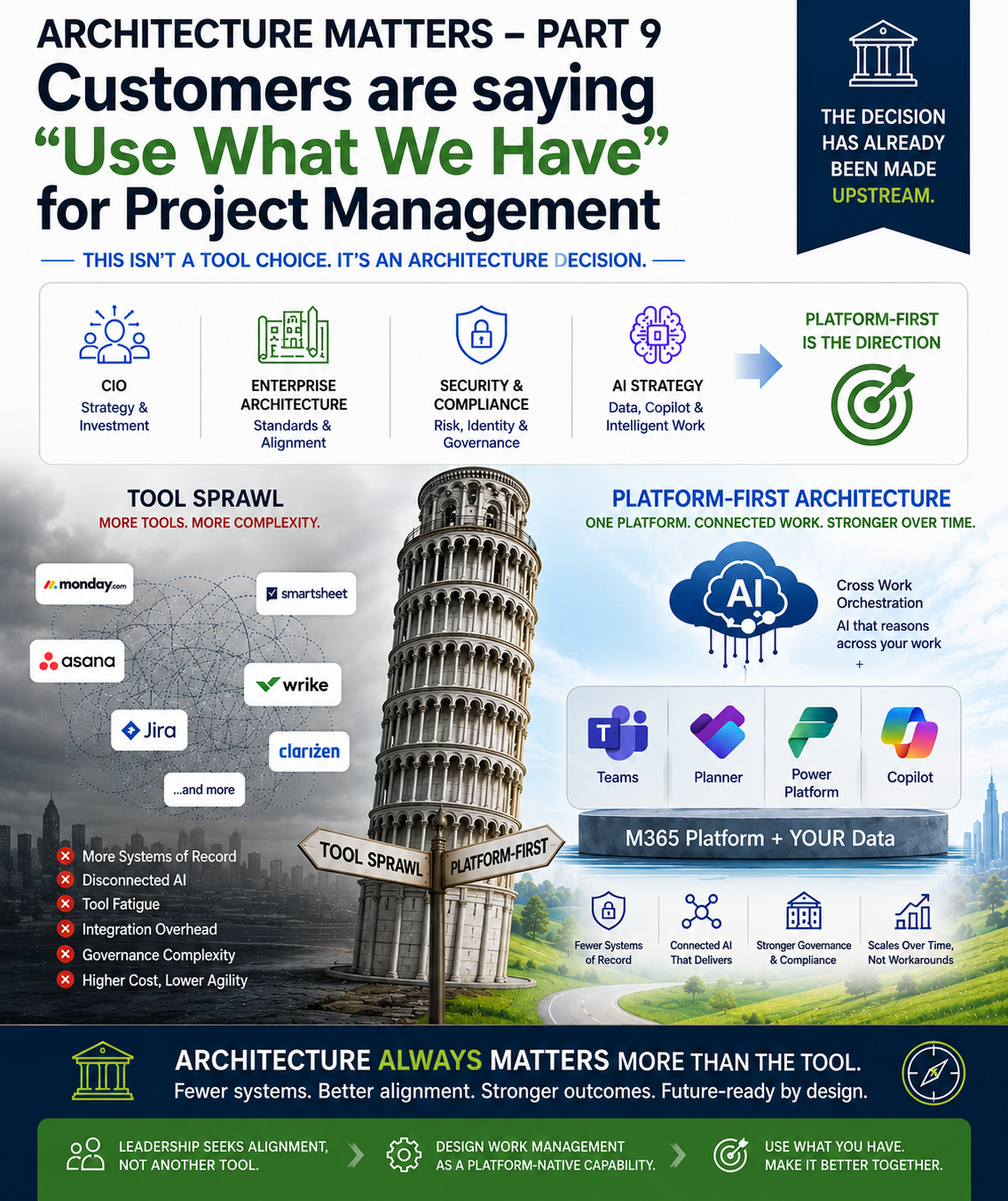
In another standalone tool… or inside the Microsoft 365 platform where the work already happens?
We’re seeing organizations evaluate two very different paths.
Path 1 - Tool Replacement
Replace Project Online with another PPM tool.
Path 2 - Platform Modernization
Use Microsoft 365 as the foundation for managing work, projects, and portfolios across the enterprise.
Both paths can help with project delivery.
But they lead to very different outcomes when it comes to:
-
Visibility into how work is actually consumed
-
Automation and orchestration of work delivery
-
And how effectively AI can reason over work signals.
Increasingly, we're finding that architecture matters more than features.
For the last few years we’ve been helping organizations step back and evaluate this decision from a platform architecture perspective, not just a tool comparison.
If you're currently evaluating what comes next after Project Online - or simply rethinking how work should operate on Microsoft 365 - we’ve been running short executive briefings to walk through:
- The Future of PPM on M365
-
The two paths organizations are taking
-
What Microsoft’s evolving work management ecosystem really means
-
Where AI changes the equation
-
And what platform-based architecture looks like.
No pitch: just perspective.
If that conversation would be helpful, Contact us at Innovative-e and add ‘architecture’ to the message.
Because in the next era of work management:
ARCHITECTURE WILL MATTER MORE THAN THE TOOL.
Author's note: This post was originally shared on LinkedIn as part of a series
What's next?