Architecture Matters PART 16: MYTH - Microsoft Planner isn't enterprise PPM.
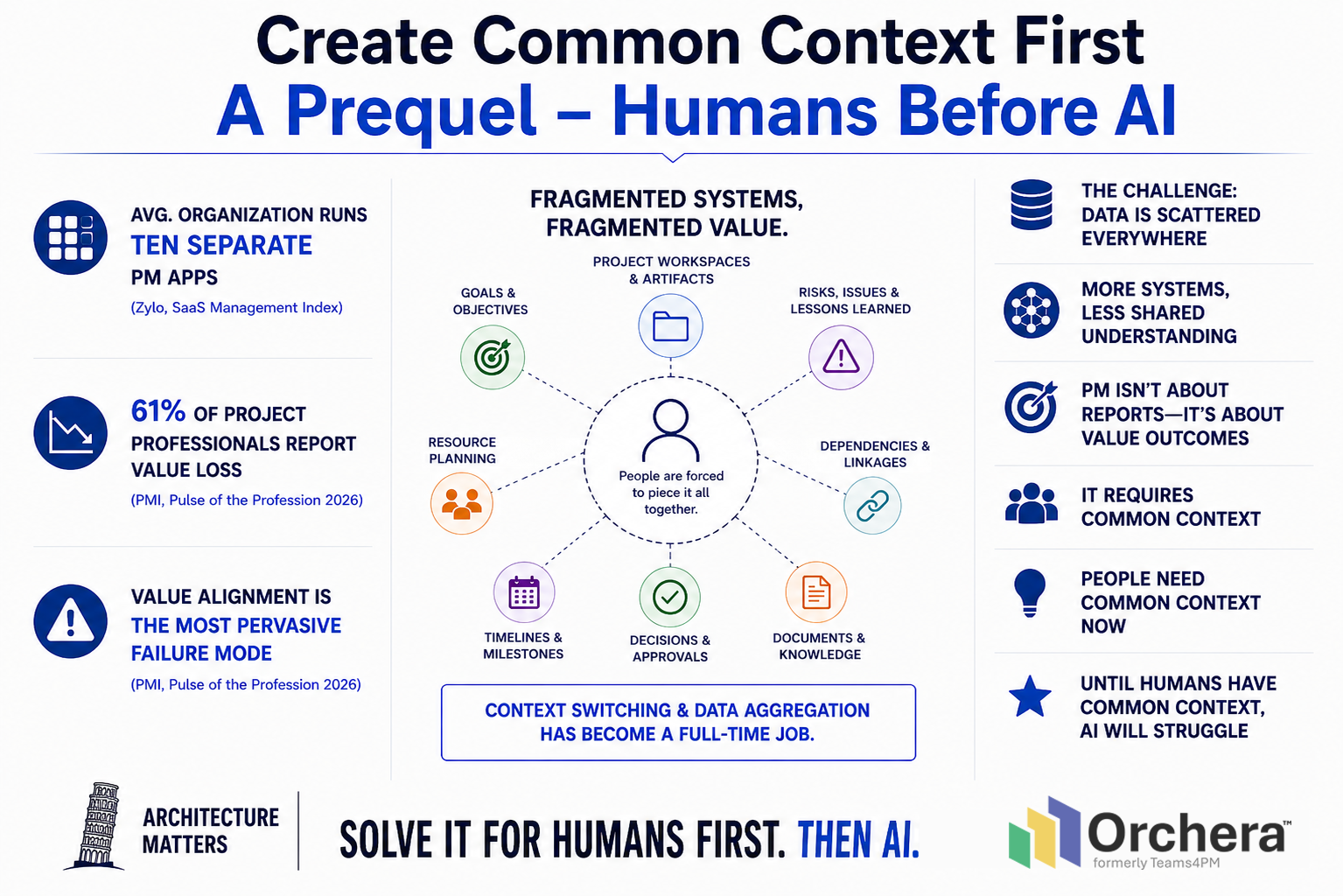
Why project and portfolio management needs common context before AI—and how fragmented systems undermine decisions, execution, and value delivery.
1 min read
Mike Taylor
:
Published
Updated
In Architecture Matters #16 I said:
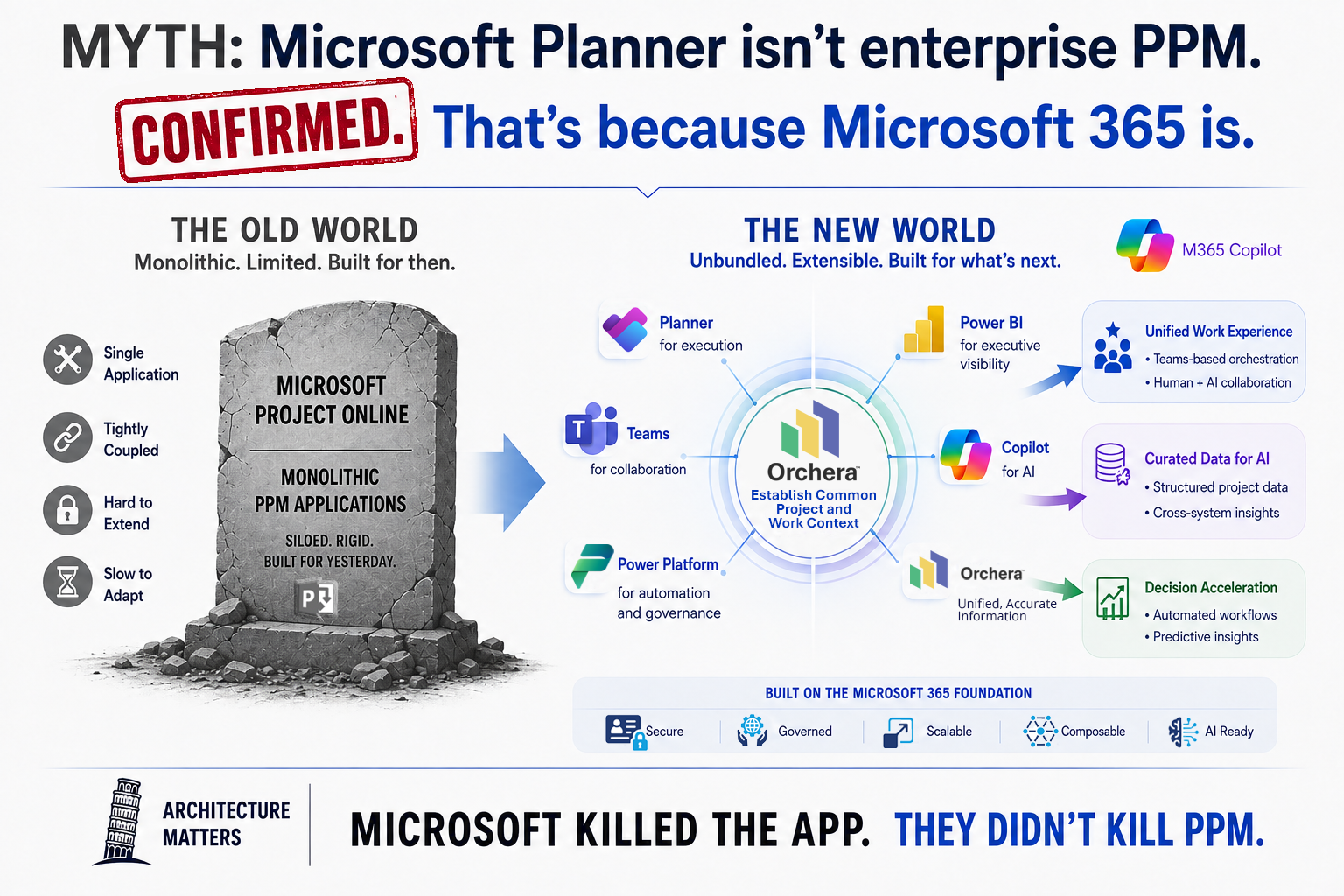
“Myth: Microsoft Planner isn't enterprise PPM. CONFIRMED. That's because Microsoft 365 is.”
Let's take that one step further: Yes, Planner IS enterprise Project and Portfolio Management (PPM) capable. With Microsoft 365.
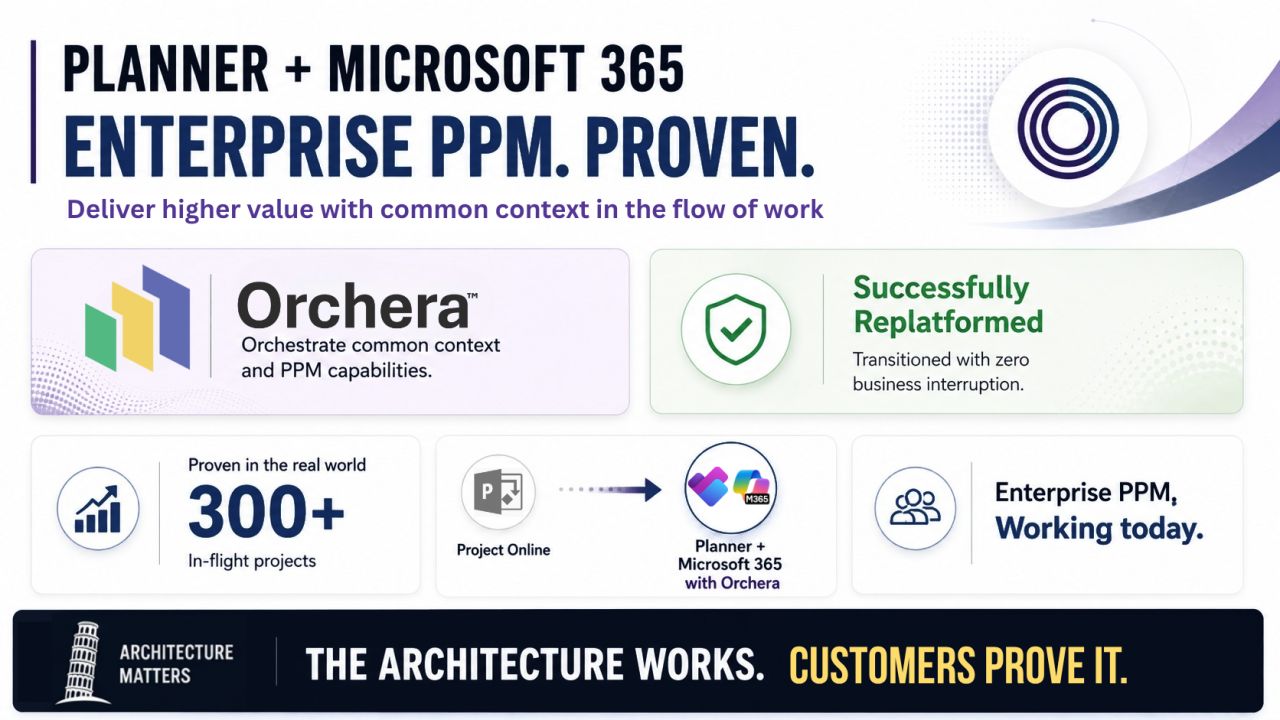
OUR CUSTOMERS ARE PROVING IT.
We've helped organizations successfully transition from traditional Project Online-centric PPM to modern Microsoft 365 solutions with Planner at the center of project execution.
But here's the key:
You don't recreate Project Online in Planner.
Microsoft 365 gives you Planner, Teams, SharePoint, Power Platform, Power BI and Copilot - modern, flexible experiences where people actually work.
What still needs to be aggregated around that work are M365 tools and enterprise PPM capabilities:
Governed project workspaces & collaboration
Demand & intake management
Issues, risks & actions
Resource planning & time tracking
Strategic alignment
Financial governance
Portfolio analytics & executive visibility
That's the architectural gap and the answer isn’t another monolithic PPM platform that pulls work and data away from Microsoft 365. It's an orchestration layer that adds the context, governance and visibility around the work already happening there.
We built it. Our customers are using it. And they're proving that Microsoft 365 + Planner is enterprise PPM.
IT'S WORKING TODAY!
ARCHITECTURE MATTERS!
Author's note: This post was originally shared on LinkedIn as part of a series
Why project and portfolio management needs common context before AI—and how fragmented systems undermine decisions, execution, and value delivery.
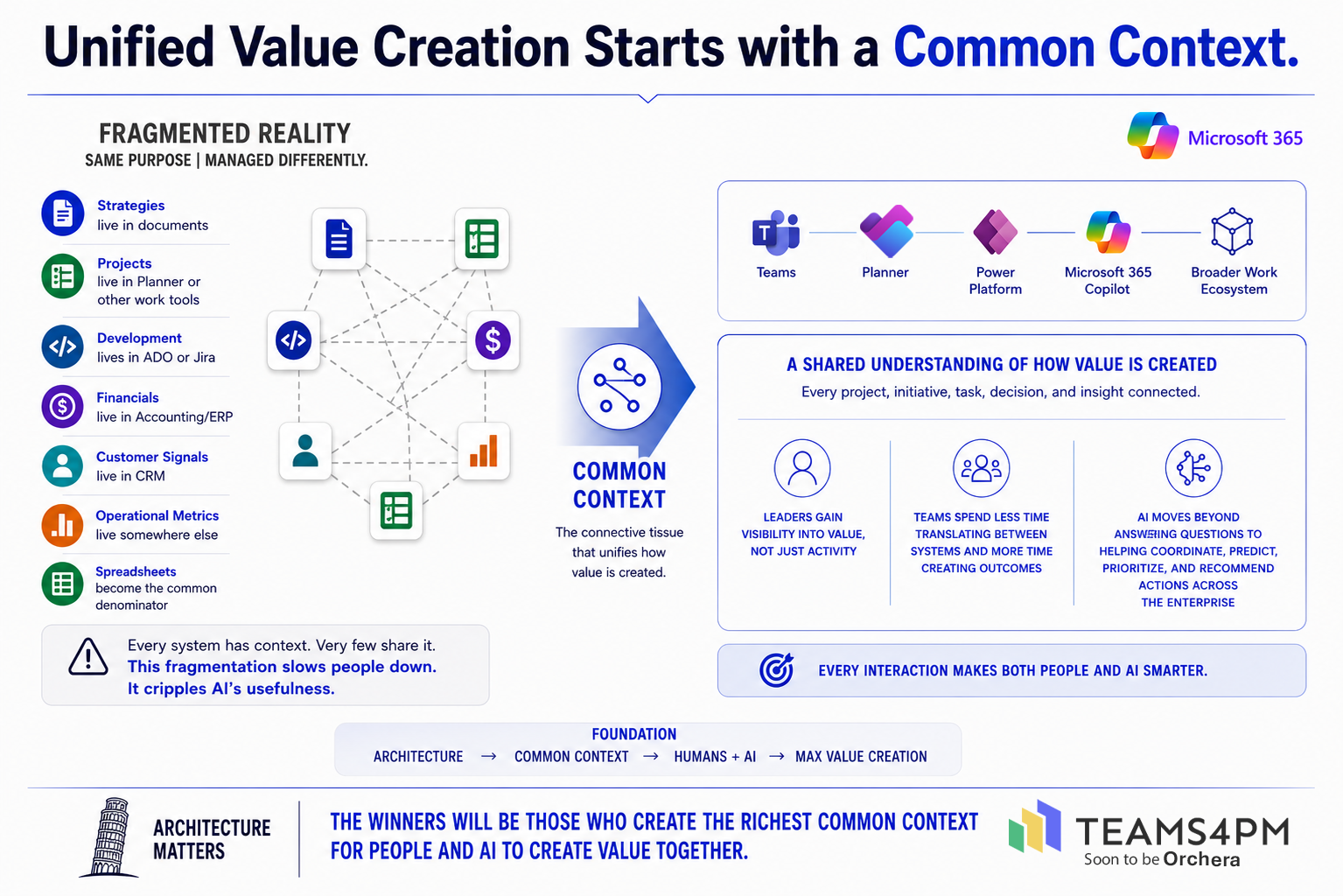
Learn how common context connects people, work, and AI across Microsoft 365 to drive unified value creation.